
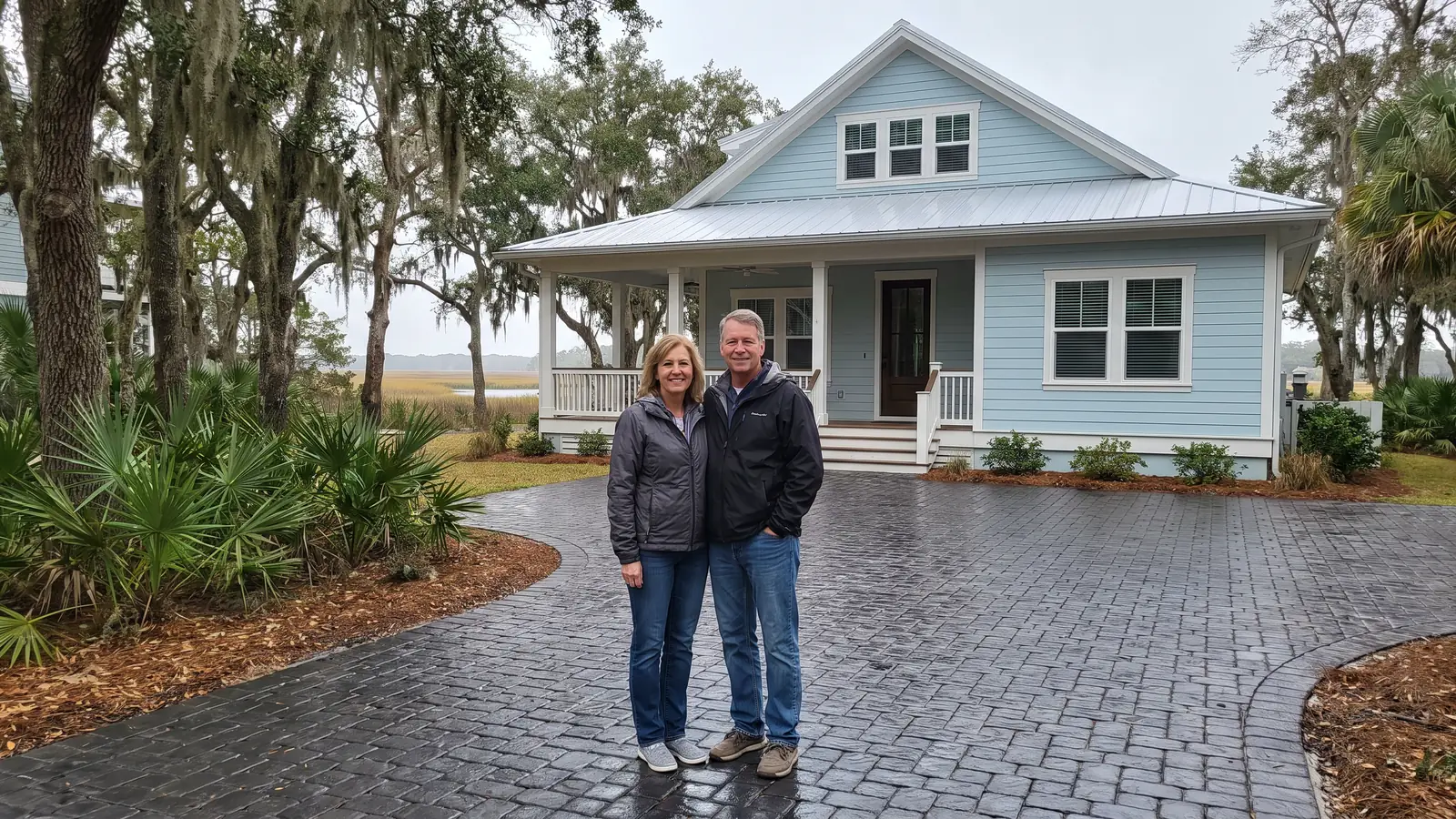
Paver sealing for St. Simons Island homes
Paver Sealing in St. Simons Island, GA
Under the live oaks of St. Simons Island, tired pavers can get a free sealing estimate when you call (912) 741-3281.
- Brings out deeper paver color
- Fresh joint sand helps lock pavers in place
- Gives weeds less room to grow
- Makes the surface easier to keep clean
- Free estimate, no obligation
Request a Free Estimate
Free, no obligation.
Fast, careful paver sealing in St. Simons Island
Paver sealing on St. Simons Island starts with a free visit to your driveway, pool deck, walkway or patio. A local contractor washes, re-sands and seals, and a reply arrives within 1 business day, frequently sooner. Phone (912) 741-3281 to book it.
Picture a St. Simons Island drive gone dull under the oaks, with a green edge along the garage and gaps opening between pavers. A solid wash, fresh sand and a new coat restore the color and snug up the joints. When you want a price, you can ask for a free estimate online and tell the contractor what you see.
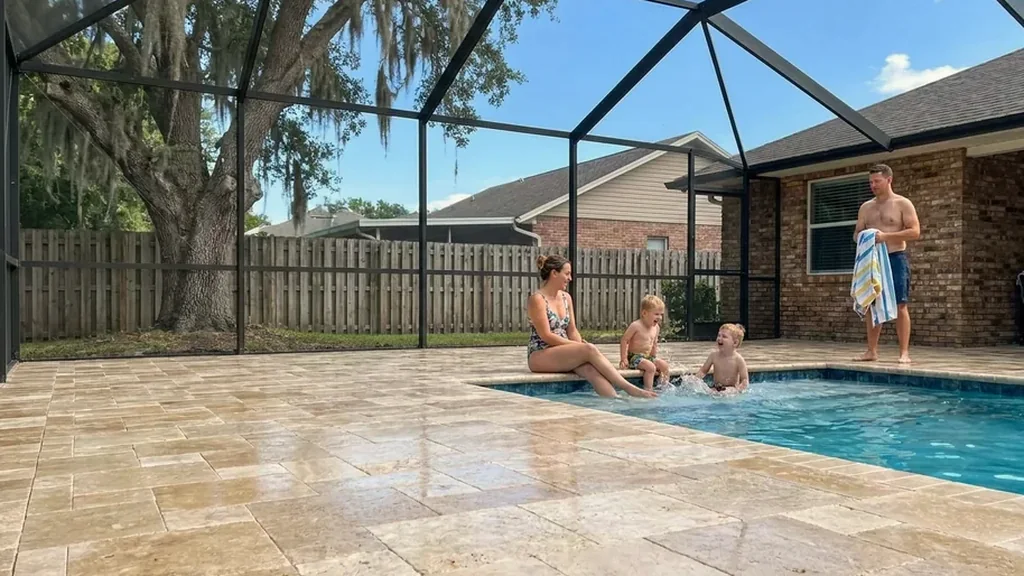
Why hire a local paver sealing contractor in St. Simons Island?
St. Simons Island homeowners tend to choose a contractor who knows the causeway, the marsh air and the live oak shade, since all three shape a sealing day. To talk about your own lot, ask for a free estimate online.
Free visit, written price
The contractor looks at your pavers on the island and quotes a price first. You decide afterward, with nothing owed for the visit.
A range from next door
No Georgia figure turned up, but nearby Northeast Florida companies list $1.75 to $3.25 per square foot for the full clean, sand and seal.
Finish to suit the house
Matte suits a quiet island look, and a wet look deepens color but shows scuffs sooner. You choose before work starts.
Prompt replies
Messages get an answer within 1 business day, and often faster, if you live here all year or part of it.
Get Your Free Estimate in St. Simons Island
Tell us about your pavers in St. Simons Island.
Free, no obligation
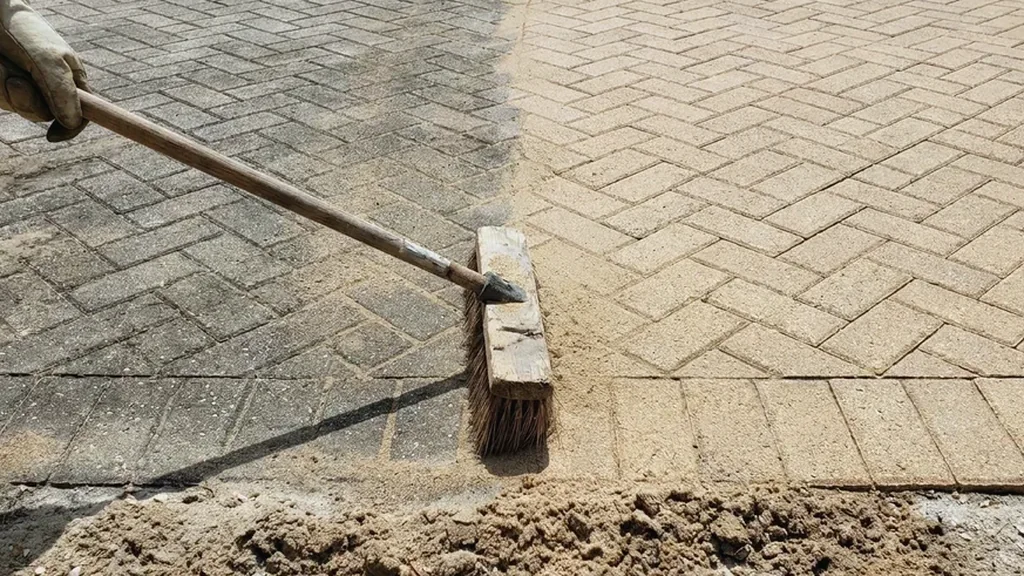
What paver problems show up most in St. Simons Island?
Storm surge salt and silt
On St. Simons Island, surge water can leave salt and silt in paver joints, and a driveway that sat in it holds both. Sealer would lock them in, so a lot that has taken water needs a full wash and fresh sand first. A gray crust near the garage door or the low corner gives it away.
Marsh air and lingering damp
The marshes of Glynn lie along the west side of St. Simons Island, and the Intracoastal Waterway runs beyond them. Rain peaks in August and September, when afternoon thunderstorms are typical. Algae thrive in wet conditions and may grow faster in shade with little air movement, so a patio near the marsh edge can stay green longer than one in open sun, and a walk beside a hedge does the same.
Live oak shade and leaf stains
A canopy of live oaks and other hardwoods draped in Spanish moss shades much of St. Simons Island. A Jacksonville company lists leaf tannins from oaks among the things a driveway collects. Those stains settle into pavers, and one company says tree roots can lift a section. Repairs come before any sealing, since a coat over a lifted spot only preserves it.
Sandy, poorly drained ground
USDA describes the Leon soil series, a regional sand, as poorly drained to extremely wet in places, found on tidal marshes and flats of the Atlantic coast. That is a regional fact, not a lot survey. Where water drains slowly, pavers stay damp and joint sand moves, so the base and the joints are checked before a coat goes on. Low spots near the marsh get extra attention during the wash, and so do the joints beside any downspout.
A coat from an unknown date
St. Simons Island has doubled in population since 1980, so many pavers here were laid by different owners in different decades. Nobody may remember what was put on them, and a patchy or peeling coat is a clue it needs attention first. Water-based sealer will not go over a solvent-based coat, so the contractor works out what is on the surface first. If an old coat has failed, it may need stripping, which adds time and cost.
Does paver sealing differ between the south end and the quiet north end of the island?
It can, because most commercial and residential development on St. Simons Island is on the southern half, while much of the northern half stays marsh or woodland. South end lots near the Pier Village and the village streets sit closer together, and access for gear can be tight. A north end lot may have more room but more shade and marsh damp. Say which end of the island you live on when you ask for a free estimate online.
Away from the water, the live oak canopy decides a lot. St. Simons Park, a grove of oaks off Mallery Street, shows the kind of shade many homes sit under. Heavy shade slows drying after rain, and a sealing date can slide because of it, so call (912) 741-3281 and say how much sun your pavers get during the day.
Many owners on St. Simons Island also have a second home, and about 27 percent of housing units were seasonal or occasional use in the 2010 Census. You can arrange the visit by phone or text and let the contractor in while you are away. Share any gate code, or any rules from your community association, when you ask for a free estimate online.
What does paver sealing cost in St. Simons Island?
No Georgia price figure was found, but companies in nearby Northeast Florida commonly publish $1.75 to $3.25 per square foot to clean, sand and seal. On St. Simons Island, silt, shade, thin joints and an old coat all push a job around inside a range like that. A 20 by 20 patio is 400 square feet, so apply the per-square-foot range to your own area. To see where you land, ask for a free estimate online.
Prep is most of the price, and one Jacksonville company says it spends about 2 to 3 hours of prep for every hour of sealing. A long drive over the causeway, tight village lots and a locked gate can add time, and failed old sealer has to be stripped before a new coat. Call (912) 741-3281 to hear which of those could affect your lot.
| Paved area | Typical example | Clean, sand and seal |
|---|---|---|
| 300 sq ft | Small patio or walkway | $525 to $975 |
| 600 sq ft | Two car driveway | $1,050 to $1,950 |
| 1,000 sq ft | Large driveway or pool deck | $1,750 to $3,250 |
| 1,500 sq ft | Driveway plus pool deck | $2,625 to $4,875 |
Math based on the $1.75 to $3.25 per square foot that Northeast Florida paver companies publish. Your contractor sets the actual price after seeing the surface. Repairs, leveling and stripping failed sealer are usually extra.
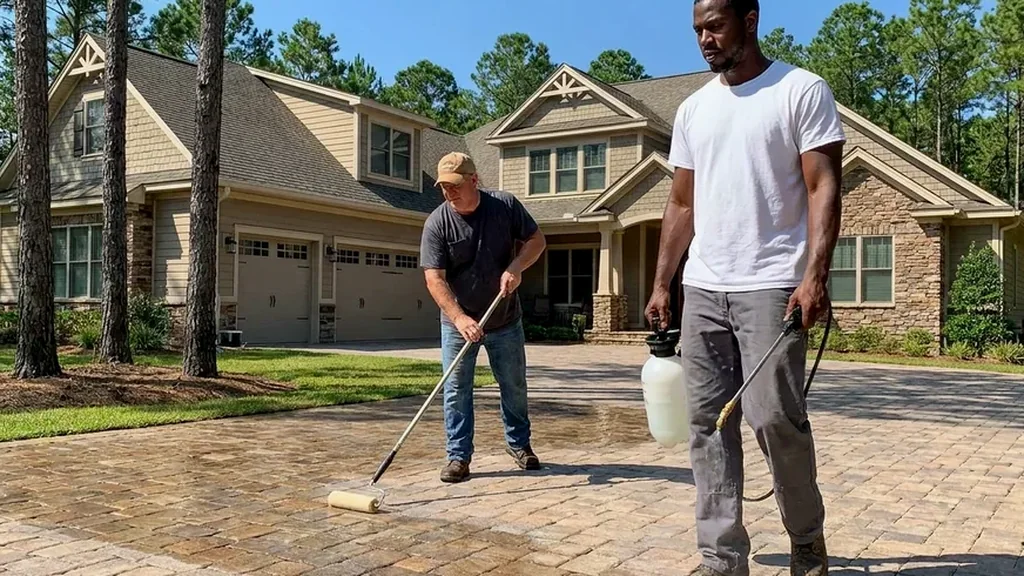
How does a paver sealing job work in St. Simons Island?
Walk the lot, check the base
The contractor looks at how water leaves your St. Simons Island drive, where oak roots have pushed up pavers and whether the marsh side stays wet. You can point out any spot that floods in a storm. Sunken or lifted spots are marked, and an earlier coat gets tested before a product is chosen.
Wash away salt, silt and tannin
Cleaning takes off salt film, silt from past high water, green growth and oak leaf stains. Shaded edges can need a second pass, because growth lingers where the sun is rare. Oil and rust get a first treatment, and a Jacksonville company concedes the oldest stains can stay faintly visible. Irrigation rust near sprinkler heads is treated here too.
Fill the joints with fresh sand
Washing takes joint sand out, so new sand goes in and the surface is swept clean. On the island's sandy ground, full joints hold pavers in place and keep weeds from taking hold. Skipping this step leaves the sealer with nothing solid to lock in, and thin joints start the weeds again within a season.
Wait out the damp
Sealer wants a dry surface, so a full day of waiting after cleaning or rain is the safe rule. August and September bring afternoon storms, so a careful contractor picks a window with a clear forecast. Shaded and marsh-side pavers may need extra hours, and a roofed lanai stays muggy and slow to dry. One Jacksonville company warns that wet-look sealer applied to damp pavers can go cloudy and white.
Seal, then plan parking
Sealer goes on with a sprayer and a roller, in the finish you chose. A Jacksonville company puts feet back within hours and cars back in about a day. If you rent your home out, plan guest arrivals around that cure time. Ask the contractor for a firm time on your job, since product and weather both matter.
Complete paver services in St. Simons Island
Island sealing runs in one order: wash, replace the sand, dry and seal. The wash clears salt, silt and leaf stain so none of it gets locked under the coat. New joint sand goes in before any sealer. To learn how long each stage runs on your lot, phone (912) 741-3281.
Long drives, pool decks and shaded front walks are common on St. Simons Island, and each ages differently. Drives take tires and oak stains. Pool decks take splash and sun, while walks near the marsh stay damp and go green, and a carport pad takes oil. List the surfaces you want done when you ask for a free estimate online.
Pick a base first: water-based, unless an earlier owner left a solvent-based coat, which water-based cannot follow. Then pick a look. A wet look gives richer color while scuffs show up sooner, so it suits a pool deck better than a busy drive. Phone (912) 741-3281 to talk it over.
Rain here averages 45 inches a year, with the most in August and September, and summer highs run 88 to 90 degrees. Fall and spring are the calm seasons for coating, and a Jacksonville company says never to seal right before a downpour. Storm days are skipped, and you can ask for a free estimate online to choose a window that works around your calendar.
Questions to ask before you hire
- Will the estimate list the square footage, the sealer and the number of coats?
- Can new pavers be sealed right after they are installed, or should I wait?
- Can you send proof of insurance before the work day?
- How often do pavers here need to be resealed?
- Do you replace the joint sand that washes out during cleaning?
- How long should cars and kids stay off the driveway after sealing?
- Can you clear the green algae along the edges near my sprinklers?
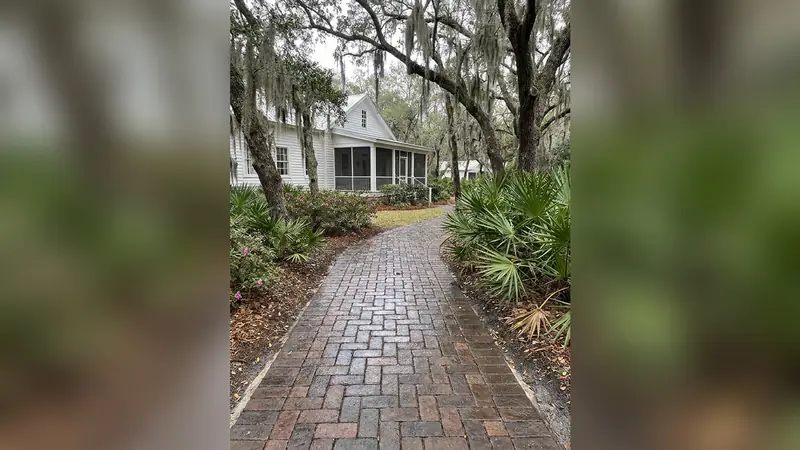
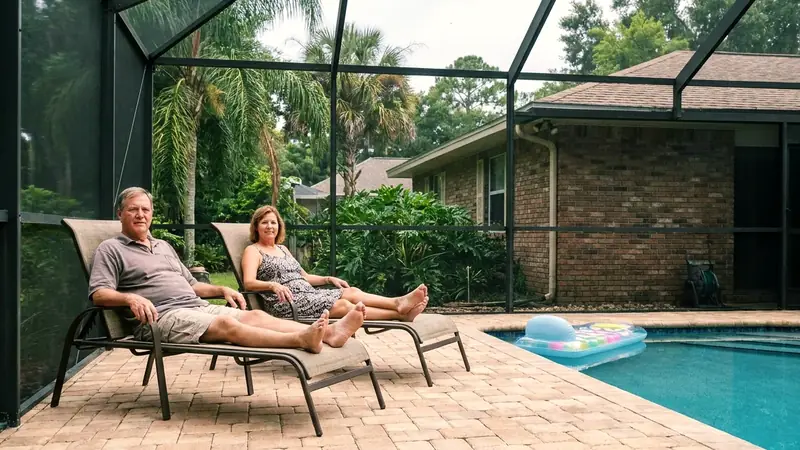
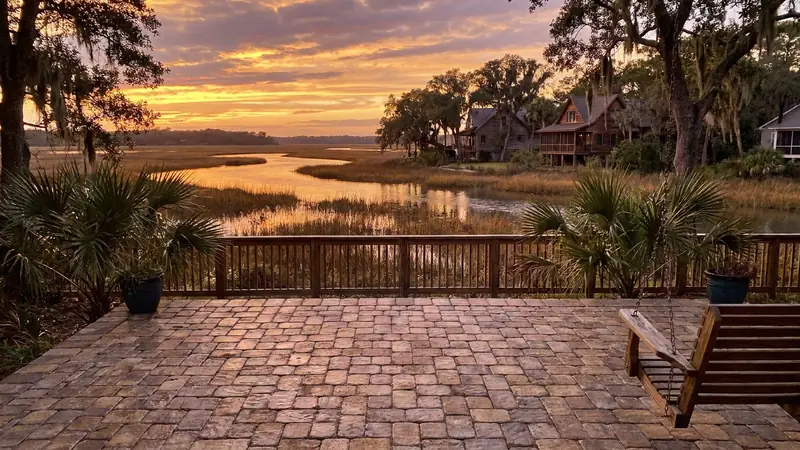
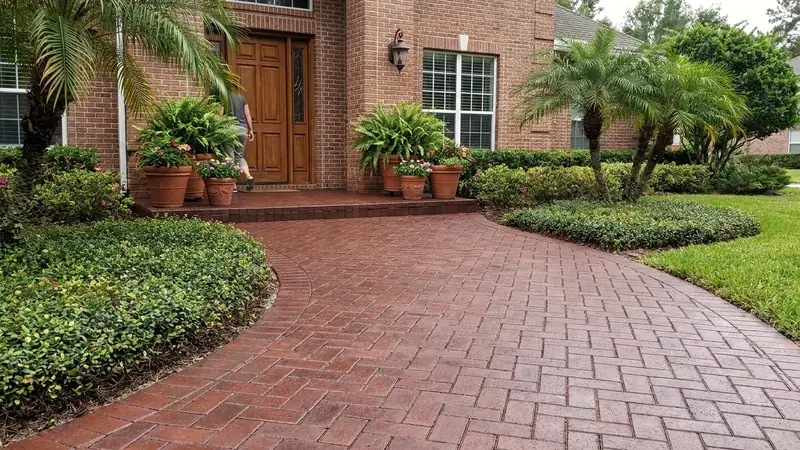
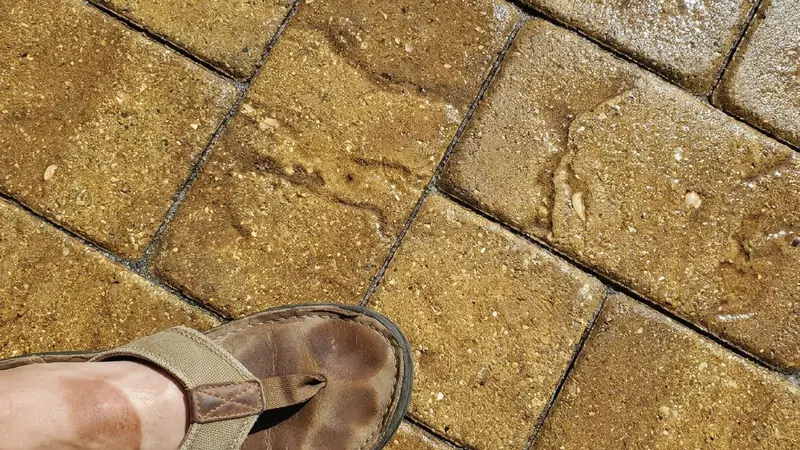
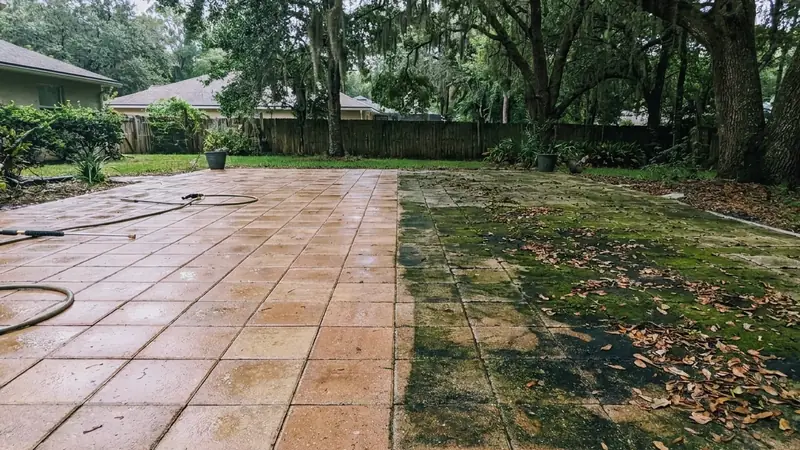
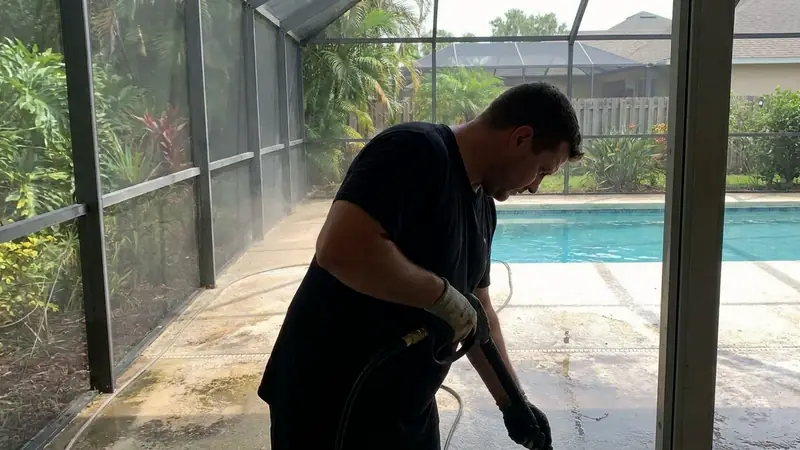
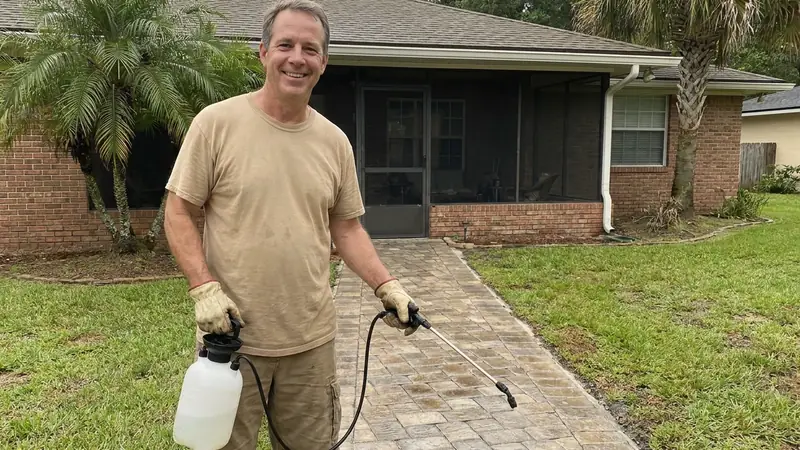
What do sealed pavers look like around St. Simons Island?
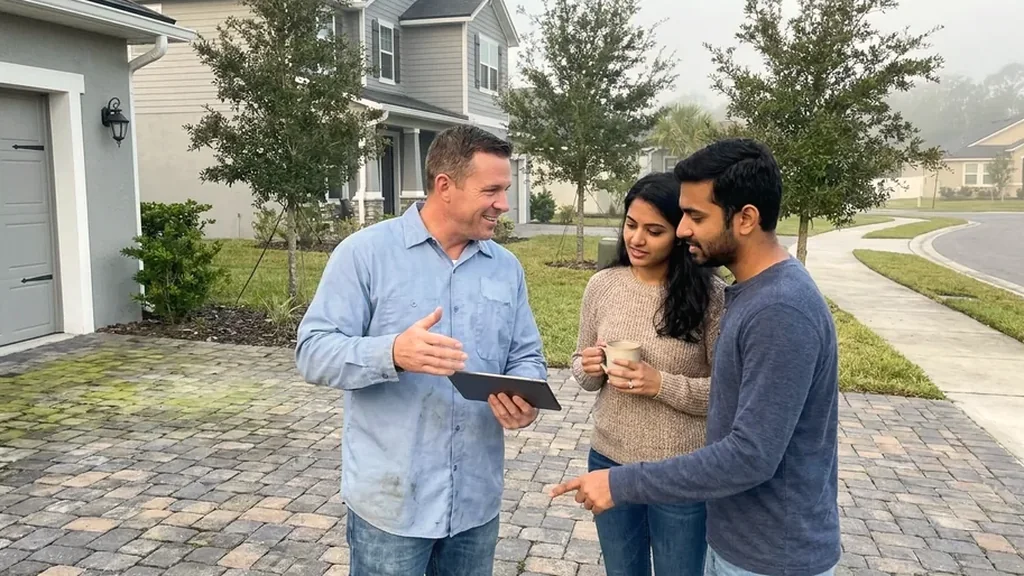
Why local matters in St. Simons Island
Someone who works St. Simons Island every week knows what a storm surge leaves behind and how long marsh-side pavers stay damp. That sets the wash and the drying time. It also tells you how many days to set aside. For someone who works Glynn County regularly, call (912) 741-3281.
Local knowledge also covers getting here, since the F.J. Torras Causeway joined the island to Brunswick in 1924 and was covered with water and closed during Irma. A contractor who plans around tides, storms and bridge traffic is less likely to lose a day, and a lost day matters when sealer needs dry weather. You can ask for a free estimate online to ask about scheduling.
Owners who live elsewhere part of the year gain the most on St. Simons Island. A local contractor can meet the weather, send word of any surprises and keep your dates flexible. Describe your situation and how you like to be reached when you ask for a free estimate online.
Which St. Simons landmarks can I name when I call for a sealing estimate?
Name the one closest to you, starting with the St. Simons Lighthouse. It was built in 1872 and stands 104 feet tall near the pier in Pier Village and Neptune Park, with its museum in the keeper's dwelling. Neptune Park also holds the Fun Zone with a public pool, and the Casino Building next door houses the library. If you live around the village on St. Simons Island, call (912) 741-3281.
Farther up the island, Gascoigne Bluff has two tabby cabins from Hamilton Plantation, and Epworth by the Sea opened there in 1950. Fort Frederica, begun in 1736, and Christ Church, Frederica sit on the west side, and the church was rebuilt in 1884. Demere Park and Gascoigne Park are public parks too. Mention the one nearest your street when you ask for a free estimate online.
The St. Simons Lighthouse was built in 1872 and stands 104 feet tall, with 129 steps to the observation gallery. The island covers 17.7 square miles, 15.9 of it land, with sandy beaches on the ocean side, marshes to the west and maritime forests inland. Name the part of the island you live on when you ask for a free estimate online.
Frequently Asked Questions
What is the average cost to seal pavers on St. Simons Island?
No Georgia figure was found, but nearby Northeast Florida companies list $1.75 to $3.25 per square foot to clean, sand and seal. Surge silt, shade growth and an old coat move a job within a range like that. Have the total area put in writing, so you can set one bid beside another. Check that sand and stain work are counted in the number.
How long do paver sealers last on St. Simons Island?
Expect a coat to last two to five years, going by what companies tell homeowners. Full-sun drives need a fresh coat about every 18 to 24 months, says a Jacksonville company, and shaded walks every 24 to 36. Once water sinks in and stops beading, the coat is spent. Shade and tires both shorten the span, so check shaded and busy spots first.
Is there a downside to sealing pavers?
The downsides are upkeep and timing. Sealer does wear off, so expect another coat later, usually after a few years, and a wet look reveals scuffs earlier than matte. Dry weather is required too, which can delay a job in a wet August on St. Simons Island. None of these is a reason to skip sealing, but all are worth weighing before you pick a finish.
How often should you get pavers sealed on the island?
Plan on every two to five years, with shaded and heavily used surfaces on the shorter end, since sun, rain and tires all wear a coat down. Film-forming sealers are commonly quoted at 3 to 5 years, and driveways wear faster than patios. A contractor can look at your St. Simons Island pavers and tell you where they stand. A busy drive can need its next coat well before a quiet side walk does.
How much would a 20x20 paver patio cost to seal?
A 20 by 20 patio is 400 square feet, so multiply that by the published per-square-foot range of $1.75 to $3.25. The result is a starting point, since small jobs can cost more per square foot. Ask for a written quote, with the square footage and each step listed, so a St. Simons Island patio can be compared with another bid line by line.
Why is paver sealing so expensive?
Prep takes most of the labor, more than the sealer does. One Jacksonville company says it spends about 2 to 3 hours of prep for every hour of sealing, and failed old sealer may need stripping. Quotes also reflect drying time and joint sand. A contractor who drives over the causeway for a small job may add a minimum charge, so ask.
Can pavers that have taken storm surge still be sealed?
Yes, after a full wash, fresh sand and a complete dry-out. Surge water can leave salt and silt, and sealing over it would trap both. Washing takes joint sand out, so fresh sand goes back in before the coat. If water ever reached your lot, say so at the first visit, since pavers near the marsh side of St. Simons Island are the likeliest to have held water.
Should lifted or sunken pavers be fixed first?
Yes, repairs go first. Sealing keeps a lifted or sunken section exactly as it is, a Jacksonville company says, and tree roots are known to lift pavers. Point out the spots to the contractor. Oak roots near the street edge and the garage apron are the usual places for a lift, and marking them with a flag makes the visit quicker.
Nearby areas we serve
Ready for a Free Estimate in St. Simons Island?
Call (912) 741-3281 and tell us about your pavers.
Free, no obligation